Surface preparation is everything that happens before the first topcoat: washing, stripping failed coating, filling and repairing, sanding, treating rust or mould, masking, and priming. On a typical Adelaide exterior repaint it accounts for roughly half to two-thirds of the labour on site — and it is the single strongest predictor of how long the finish lasts.
Two houses painted with the identical premium acrylic can differ by five to ten years of service life. The difference is almost never the paint. It is what the paint was asked to stick to.
What preparation actually covers
Prep is not one task. It is a sequence, and skipping any step transfers the risk to the coating.
Washing and decontamination. Every exterior surface carries a film of dust, pollen, salt, exhaust residue and — on shaded southern walls — mould. Paint applied over that film bonds to the film, not the substrate. Adelaide's dry summers make this worse than people expect: fine grit from months without rain sits in the texture of render and weatherboard grooves.
Removing failed coating. Anything flaking, blistering, bubbling or lifting has to come off. Scraping and wire brushing handle most of it; badly weathered surfaces may need mechanical sanding back to a sound edge. Painting over a loose edge simply moves the failure line a few centimetres.
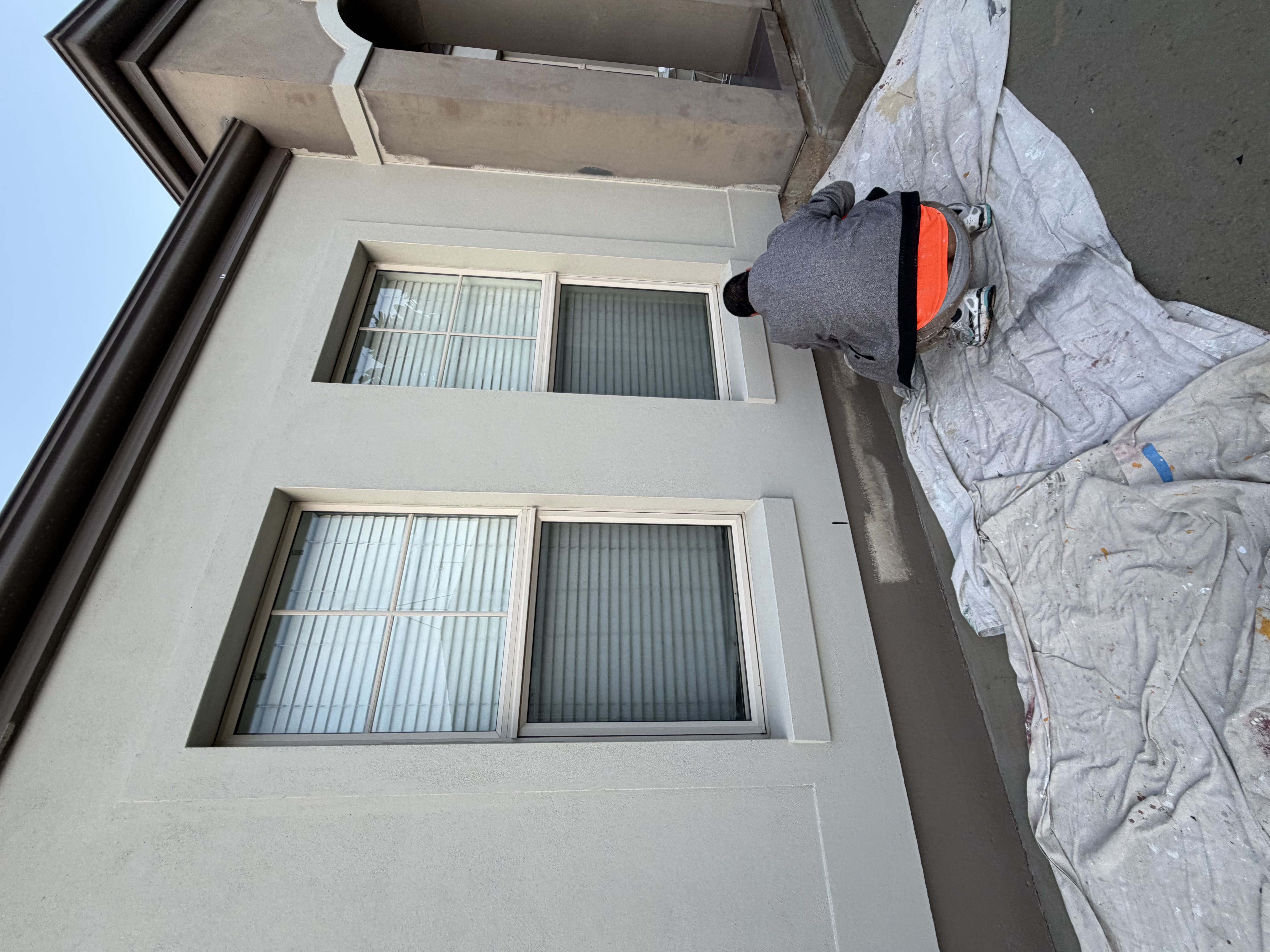
Repairs and filling. Cracked render, nail pops, split weatherboards, open joints around window reveals, gaps at architraves. Exterior filler and flexible sealant are chosen by movement — a crack that opens and closes with temperature needs a flexible sealant, not a rigid filler that will re-crack in a season.
Sanding and abrading. Gloss and semi-gloss surfaces are too slick for a new coat to key into. Abrading dulls the surface and gives the primer something mechanical to hold.
Rust and mould treatment. Rust is treated back to bare metal and sealed with a converter or metal primer, or it will bleed through and lift the coating within a year. Mould needs a biocide wash — painting over live spores means they keep growing under the film.
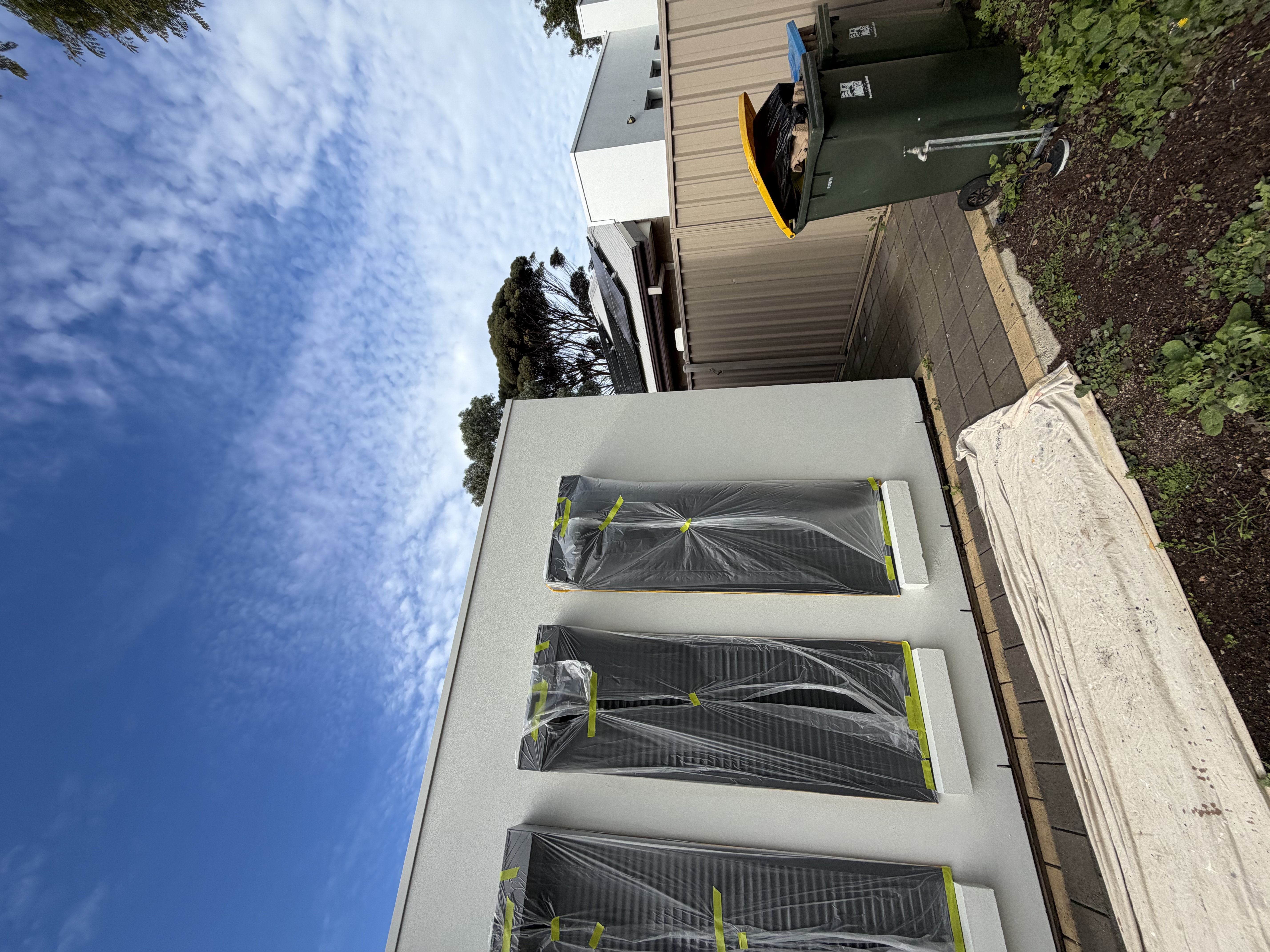
Masking and protection. Windows, sills, pavers, garden beds, solar panels, downlights, carpets. Unglamorous, but the difference between a tidy job and one that costs you a weekend of cleanup.
Priming and sealing. Bare, porous, patched or stain-prone areas need the right primer: an oil-based stain blocker for tannin-prone timber, an alkali-resistant sealer for new or repaired render, an etch or metal primer for galvanised surfaces.
Why paint fails when prep is rushed
Coatings fail in predictable ways, and almost all of them trace back to preparation.
Adhesion failure. Old acrylic paint chalks as its binder breaks down under UV — run your hand down a west-facing wall and if it comes away powdery, that is chalk. New paint over chalk bonds to a loose powder layer and peels off in sheets.
Blistering. Moisture trapped behind the film expands in heat and pushes the coating off. Common where rising damp, a failed downpipe or a leaking gutter has kept a wall wet and nobody diagnosed the source before painting.
Efflorescence. White salt crystals migrating out of brick, render or masonry. They push the paint off from behind. The cause has to be dealt with before coating, not after.
Tannin bleed. Cedar, redwood and some hardwoods release brown staining that ghosts through water-based paint. A stain-blocking primer is the only reliable fix.
Rust creep. Untreated rust under a topcoat keeps oxidising and expanding, lifting the paint in an ever-widening ring.
Adelaide substrates and what each one needs
Two Adelaide specifics are worth calling out. Coastal properties — Semaphore, West Lakes, Henley, Glenelg, Brighton, Seacliff — carry a salt film that must be washed off, not painted over, and generally benefit from coatings rated for marine exposure. Heritage suburbs — North Adelaide, Norwood, Unley, Prospect, Goodwood — often have solid masonry that needs to breathe; sealing it with the wrong film-forming coating traps moisture and does long-term damage.
How much of the job should prep be?
On a straightforward exterior repaint in sound condition, expect prep to be around half of the on-site hours. On a weathered property with peeling paint, timber repairs or rust, it can reach two-thirds or more, and the topcoats become the fast part of the job.
This is why quotes for the same house can look so different from one another. A quote that comes in well under the others has usually found that saving somewhere, and prep is the easiest place to find it because it is invisible the day the job finishes. It becomes visible in year two.
How to tell whether a quote includes real preparation
Look for specifics, not adjectives. "Full prep" means nothing. These do:
- Named washing method — pressure wash, sugar soap, biocide treatment
- What happens to failed paint — scrape, sand, spot-prime, or full strip
- Which primer or sealer, on which surfaces
- Repairs itemised — filling, sealant, rotten board replacement, rust treatment
- Number of topcoats, and whether the primer counts as one of them
- Explicit exclusions, so you know what is not included
If a quote is a single line and a number, ask for the breakdown before comparing it to anything else.
Where Fusion sits
We are Adelaide-based and we quote prep as a visible part of the scope, not a footnote. On roof work that means a controlled-pressure clean, biocide treatment, replacement of broken tiles and minor patching before any coating goes down. On house exteriors and interiors it means the wash, the repairs, the sanding and the priming are written into the quote so you can see exactly what you are paying for — and compare it fairly against anyone else's.
Every property is different, so every quote is prepared individually after we have looked at the surfaces and the access. Where a job needs work outside our scope — structural roof repairs, re-roofing, or asbestos removal — we will tell you that up front and point you to the right licensed trade rather than coat over a problem.
Frequently asked questions
How long does surface preparation take? On a standard single-storey Adelaide home, one to three days for the exterior, depending on the condition of the existing paint. Interiors are usually faster unless there is significant patching or water damage.
Can you paint over peeling paint? No. The new coating is only as sound as the layer beneath it. Loose paint must be removed back to a firmly adhered edge, and that edge feathered so it does not telegraph through the finish.
Do I need to prime everything? No — sound, previously painted surfaces in good condition usually take topcoats directly. Priming is for bare substrate, patched areas, chalked surfaces, stains, rust and anything with a compatibility question.
What is chalking and how do I check for it? UV breaks down the binder in old paint and leaves loose pigment on the surface. Wipe a dark cloth down a sun-exposed wall. If it comes away with powder, the surface needs washing and usually a binding primer before repainting.
Is pressure washing always the right way to clean a surface? Not always, and not at the same pressure. Sound render and Colorbond handle a firm wash. Old weatherboard, brittle terracotta tiles and heritage masonry need lower pressure and more chemistry — too much pressure drives water into places it should not go and can strip surface material.
Does good prep really change how long the paint lasts? Yes, and it is the largest single factor. In Adelaide's UV, a well-prepared exterior repaint typically holds up for 8–12 years. The same paint over an unprepared, chalked or damp surface can start failing within two.
Planning a repaint or roof project in Adelaide? Tell us what you're working with and we'll give you a written scope you can actually compare.