Roof painting is worth doing when the roof is structurally sound but the surface coating has faded, chalked or worn thin. It is not worth doing when the roof has leaks, widespread cracked tiles or failed bedding — paint doesn't fix any of those, and coating over them is the most expensive way to delay a real repair.
Most straightforward jobs run one to two days in suitable weather. This guide covers what the work actually involves, what changes the scope, when to call a roofer instead, and the weather windows that matter in South Australia.
What roof painting is — and what it isn't
There is real confusion between three different services, and it leads people to buy the wrong one.
Roof cleaning removes moss, lichen, algae and dust. Cosmetic and diagnostic.
Roof painting is cleaning, minor repairs, priming or sealing, and applying protective topcoats. It restores colour and adds a weather-resistant surface layer. It does not add structural strength.
Roof restoration or re-roofing is structural work — re-bedding and re-pointing ridge caps, replacing large numbers of tiles, repairing battens or sarking, or replacing the roof entirely. This is licensed roofing work and a different trade.
Fusion does the first two, plus minor patching and repair. We deliberately don't do the third — and we will tell you when that's what your roof actually needs.
The process, step by step
- Inspection. Walk the roof, photograph defects, confirm the roof is a candidate for coating rather than repair.
- Clean. Controlled-pressure wash matched to the substrate, followed by biocide treatment to kill moss and lichen at the root.
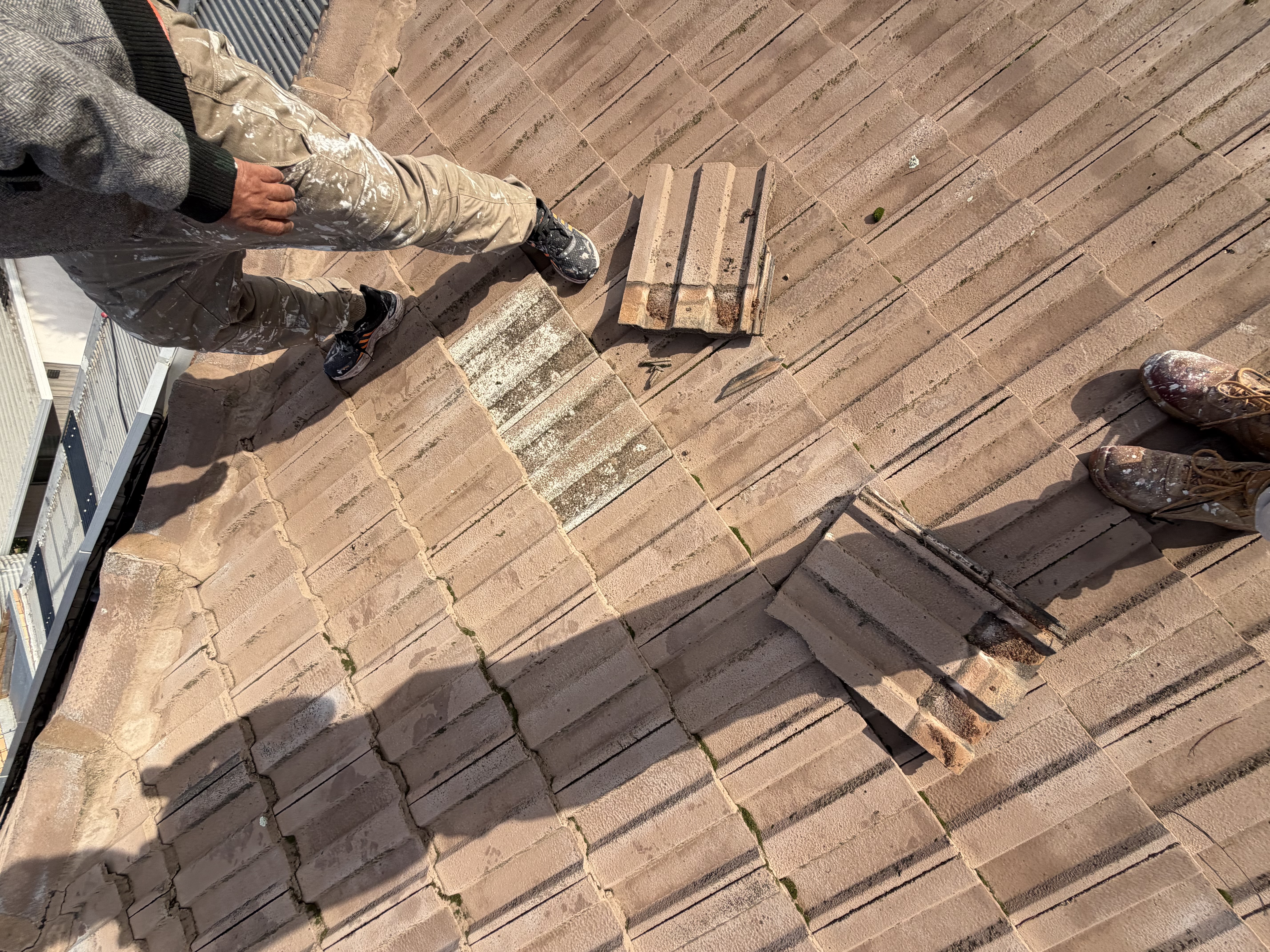
- Repairs. Replace cracked and slipped tiles, treat rust at fixings and seams, seal minor defects.
- Prime or seal. Porous concrete tiles need a sealer to stop the topcoat soaking in unevenly; bare or rusted metal needs a metal primer.
- Topcoats. Two coats, typically spray-applied for even coverage into the tile profile.
- Clean-up and check. Gutters cleared of debris, overspray checked, final walk-through.
Most straightforward jobs run one to two days. Roofs needing significant repair or rust treatment run three to four.
What changes the scope of the job
Every roof is quoted individually, because the variables below change the work far more than roof area alone.
- Roof area — measured across the roof surface, not the floor plan; a steep roof has considerably more surface than its footprint suggests
- Pitch — steeper roofs are slower to work and need more fall protection
- Access — narrow side setbacks, two-storey sections, retaining walls, established gardens
- Condition — heavy lichen, extensive broken tiles, or rust across a metal roof all add stages before any coating goes on
- Material — concrete tile, terracotta, Colorbond and cement each need a different system
- Solar panels — working around an array adds time and changes how run-off is managed
- Coating system — the number of coats and the grade of membrane specified for the substrate
What a complete roof painting scope should include
When you are comparing written quotes, check that each one covers cleaning, biocide treatment, replacement of broken tiles, rust treatment where relevant, primer or sealer, and two topcoats. If one quote is noticeably lighter than the others, work out which of those stages it left out before comparing anything else.
When you should not paint the roof
Be honest with yourself about these, because coating over any of them is work you will pay for twice.
- Active leaks or ceiling water stains. Find and fix the source first.
- Sagging rooflines or damaged battens. Structural, not cosmetic.
- Widespread cracked or slipped tiles. A handful is a patch; a hundred is a restoration.
- Failed bedding and pointing along the ridges. That's roofing work.
- Glazed terracotta in good condition. A fired glaze already sheds water. Painting it is usually unnecessary, and once coated the roof is committed to a repaint cycle permanently. Unglazed or badly weathered terracotta is a different conversation.
- A roof near end of life. If replacement is a few years away, coating it is rarely the better decision.
Weather: the South Australian window
Coatings have application specifications, and Adelaide's climate pushes against them at both ends of the year.
Temperature. Most exterior coatings want 10–35°C. Above roughly 35°C — which Adelaide delivers regularly from December to February — paint skins over before it can flow out and bond properly. Roof surfaces also run far hotter than air temperature; a dark tile roof on a 35°C day can exceed 60°C.
Rain. Coatings need to cure before they get wet. A forecast with rain inside the curing window means the job waits.
Dew and humidity. Winter mornings in Adelaide hold dew on the roof well past sunrise, which shortens the usable working day considerably. Most coatings want humidity below about 85%, and many specify 70%.
The practical answer: the best roof painting windows in Adelaide are spring (September–November) and autumn (March–May). Summer works if the job starts early and stops when surface temperatures climb. Winter is workable between fronts but slower, with more weather delays built into the schedule.
Book spring and autumn work early — they are the busiest windows for every painter in the state.
How long roof paint lasts
A properly prepared and correctly coated tile roof in Adelaide should hold up for 10–15 years before it needs attention again, with the surface staying clean for the first several years if biocide treatment was part of the job.
Metal roofs vary more, driven by how well rust was dealt with at prep stage and how much salt exposure the property has. Coastal roofs work harder.
Colour matters too. Lighter roof colours reflect more heat, run cooler, and fade less visibly than dark charcoals and blacks — worth weighing against the fact that dark roofs are currently the popular look.
Frequently asked questions
How long does roof painting take? One to two days for most jobs; three to four if significant repairs or rust treatment are required. Weather delays are the main variable.
How do you quote a roof painting job? We inspect the roof, photograph its condition and write a scope covering each stage — clean, treat, repair, seal, coat. Every roof is different, so every quote is prepared for that property rather than taken from a standard rate.
Can you paint a terracotta roof? Weathered or unglazed terracotta can be coated. Glazed terracotta in sound condition generally shouldn't be — the glaze already does the job, and coating commits you to an ongoing repaint cycle.
Can you paint a Colorbond roof? Yes. The critical work is degreasing, abrading the chalked factory coating, and properly treating any surface rust before priming. Skipping rust treatment is the most common cause of early failure on metal roofs.
Does roof painting stop leaks? No. Coatings are not a waterproofing repair. A leak needs the source located and fixed — usually by a roofer — before any coating goes on.
Will painting my roof reduce heat inside the house? A lighter colour and a heat-reflective coating can measurably lower roof surface temperature, which helps. It is a supporting measure, not a substitute for ceiling insulation.
Do I need council approval to paint my roof? Not for a straightforward repaint. Heritage-listed properties and some character overlays have colour and material controls — check with your council before committing to a colour change.
How often should a roof be repainted? Every 10–15 years for tile in Adelaide conditions. A clean at the 3–5 year mark extends the life of the coating considerably.
Want to know whether your roof is a candidate for coating? Start with when roof cleaning is the right first step, then send us what you've got for a written scope.